TOPIC COLLECTION
Heating
Flow carries heat, but it does not prove that radiators can release it or that a pump can overcome the circuit resistance. Check output, flow and head as separate linked questions.

A practical starting point
LEARN THE SYSTEM
More guides in this topic
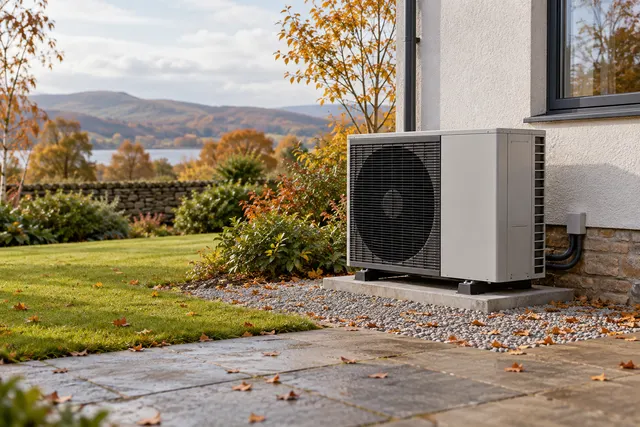
Size a heat pump from the building load and cold-weather capacity
Compare load and equipment at matching temperatures, plan auxiliary heat and test the installed system.
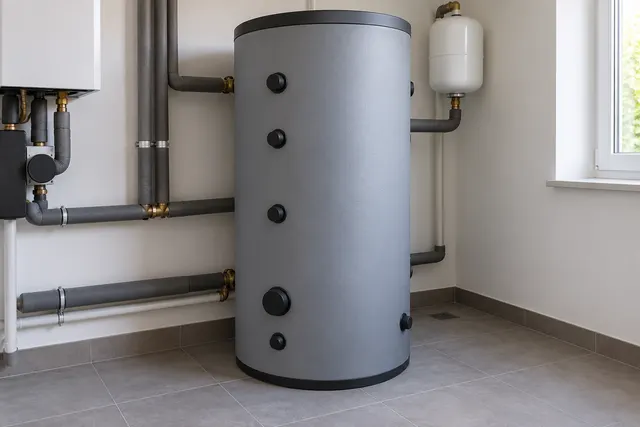
Plan a heating buffer tank without guessing
Separate the cycling problem, surplus heat, usable temperature range and existing system volume before selecting a tank.
Match heating-energy records to the weather before comparing periods
Keep space-heating input energy and matching heating degree-days on one record, then compare an explicitly limited energy-per-degree-day index.
USE THE NUMBERS
Calculators in this topic
Heat-pump design-load coverage
Compare building heat loss with heat-pump and auxiliary capacity at the same outdoor design condition.
Heat-pump daily electricity
Convert useful heat from the heat pump and auxiliary heater into an ideal daily electricity estimate.
Cost per useful heat delivered
Compare input energy and cost for a useful heating demand and seasonal performance factor.
Hydronic heating flow rate
Convert a heating load and design supply-return temperature difference into a water-flow estimate.
Radiator output at lower water temperature
Estimate how a radiator’s published heat output changes at a different supply, return and room temperature.
Heating buffer tank volume
Estimate the water volume needed to absorb surplus heat for a chosen minimum heat-source run time.
Compare heating input energy per degree-day
Compare two space-heating input-energy/HDD ratios and their signed percentage change. No baseline regression, normal-year forecast, cost or verified savings.