A generator’s advertised peak rating is not a promise that it can start every motor or power every circuit together.
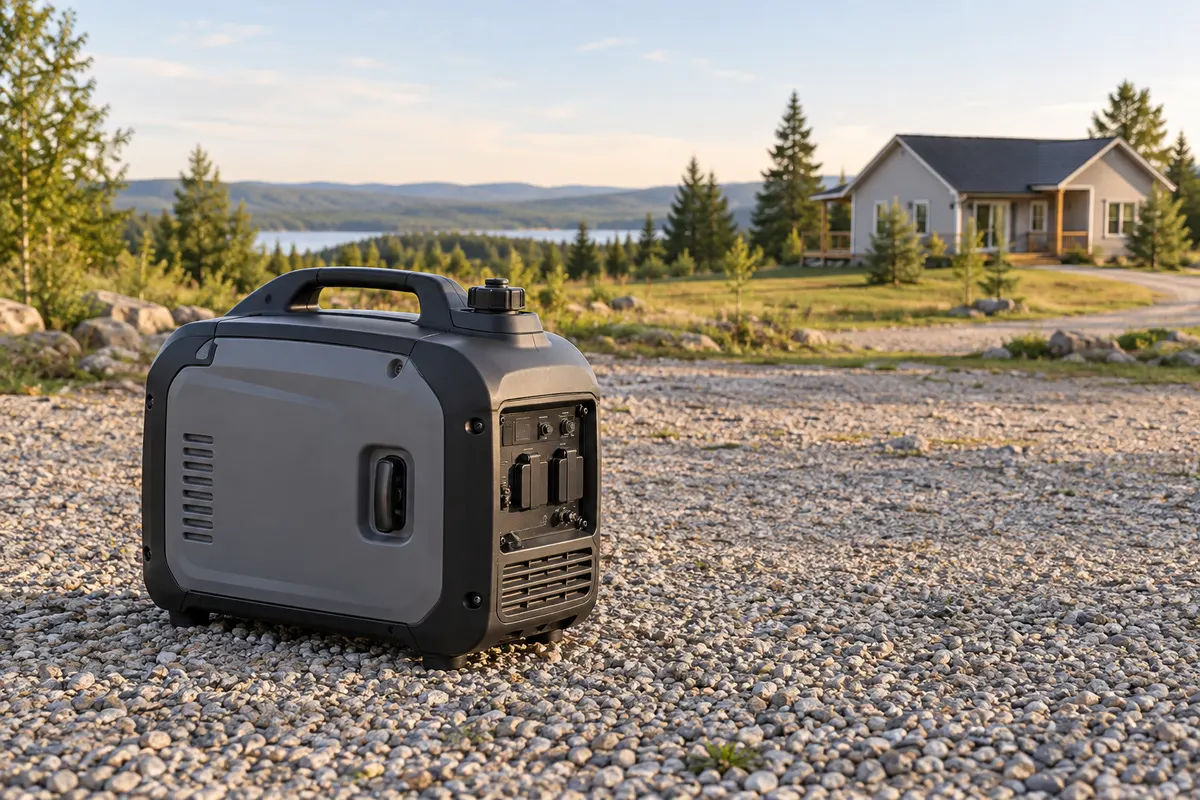
AI-generated topic illustration, not an installation diagram. Connections, dimensions and instrument readings shown are not recommendations.
1. Make a deliberately limited load list
List the functions that matter during an outage: water, refrigeration, heating controls, lights and communications. Separate optional heating, cooking and other high-power loads. Record continuous power from documentation or measurements and obtain starting requirements for motors.
A staged operating plan may reduce the peak requirement. For example, postponing a discretionary appliance while the well pump starts changes the simultaneous demand. This is a planning decision, not a reason to ignore protection or equipment ratings.
2. Keep running and starting ratings separate
If a manufacturer gives total starting watts for one motor, add the other already-running loads to that total. Do not add the same motor’s running watts a second time. If the documentation instead lists “additional starting watts”, the arithmetic is different; convert it to a total before using our tool.
The calculator handles a single motor start with known total starting watts. It does not model several motors starting together, voltage dip, power factor, ambient derating or a generator’s transient response. Ask the supplier to confirm compatibility with your actual load list.
3. Choose a safe operating arrangement
Portable generators must operate outdoors, away from openings and occupied spaces, with working CO alarms in the house. A garage, shed or basement is not an acceptable operating location. Follow the manufacturer’s operating and weather-protection instructions.
For a connection to house wiring, use an arrangement specified and installed by a qualified electrician. Never feed power into a household socket. The CPSC hazard guide explains the shock and backfeeding risks, as well as safe refuelling precautions.
CPSC · Portable generator hazards ↗4. Make the outage routine usable
Keep a short procedure with the equipment: where it operates, what it supplies, who can start it and how transfer back to the normal supply works. Use the installer’s and manufacturer’s instructions rather than improvising a sequence during a storm.
Record service intervals and fuel arrangements. A successful test with a lamp does not show that the well pump will start. Have the intended load combination verified through an appropriate commissioning test and record the limitations.
Questions for the equipment supplier
| Question | Why it matters | Evidence to request |
|---|---|---|
| Can it supply the running load continuously? | Continuous and advertised peak ratings differ | Rated output under your conditions |
| Can it start this motor with other loads on? | Transient response is separate | Manufacturer compatibility confirmation |
| What happens at altitude or high temperature? | Available output may be reduced | Applicable derating data |
| How is the house isolated from the grid? | Prevents dangerous backfeeding | Electrician’s approved connection design |
| How is fuel handled and stored? | Runtime and safe operation | Operating and maintenance instructions |
Worked example
One motor starting while essentials remain on
Other running loads total 700 W. A motor uses 600 W running and has a documented total starting demand of 1,800 W.
Running combination = 700 + 600 = 1,300 W
Starting combination = 700 + 1,800 = 2,500 W
These are load requirements, not a recommended generator size. Confirm duration, voltage, power factor and actual motor-starting capability with the manufacturer.
What to have ready
- Essential-load list
- Total starting requirement for each motor
- Approved electrical connection
- Safe outdoor operating location
- Service and fuel plan
Common mistakes
- Adding running watts twice to a total starting rating.
- Choosing equipment only by its peak advertising number.
- Running a portable generator in a garage.
Tools for these measurements
Prepare the measurements with these instrument guides.
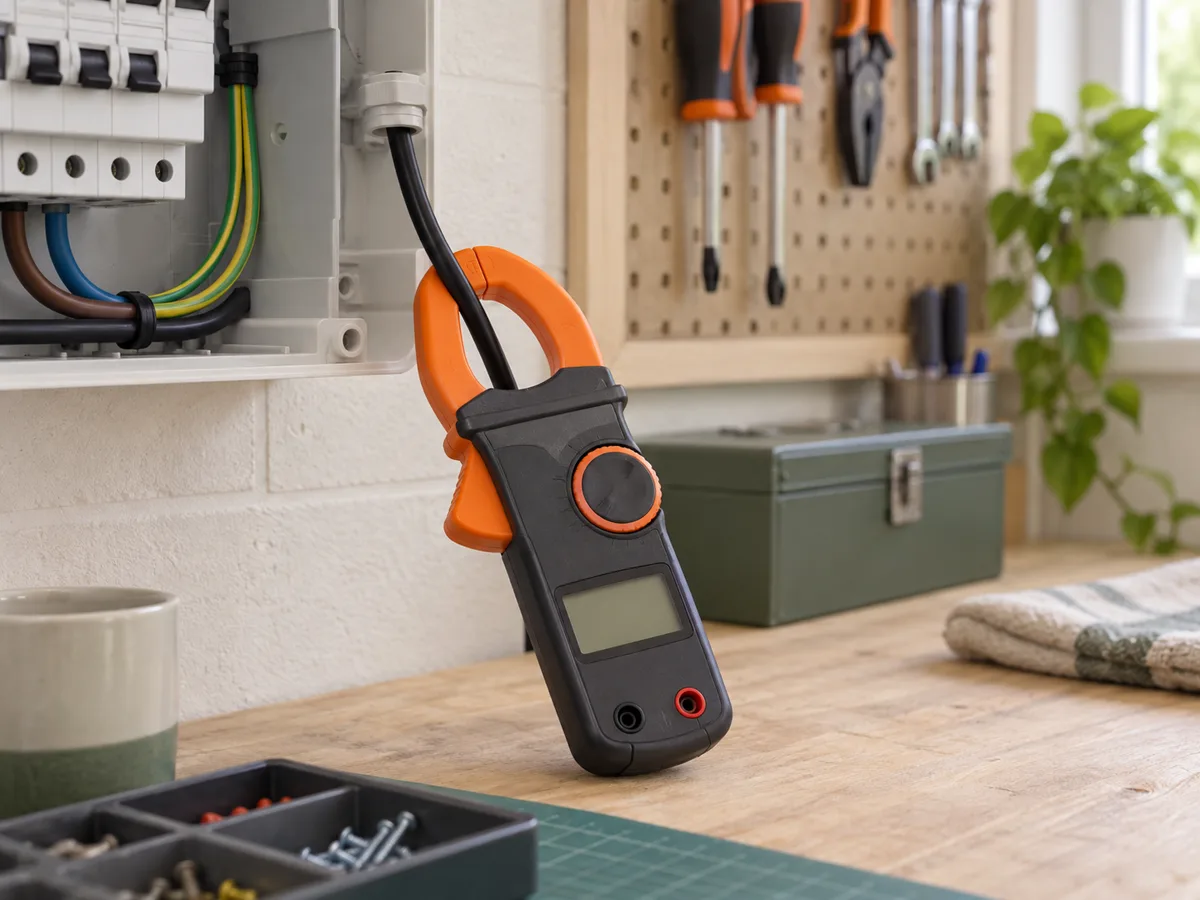
Measure current without breaking the circuit and avoid the classic mistake of clamping around the whole cable.
How to use it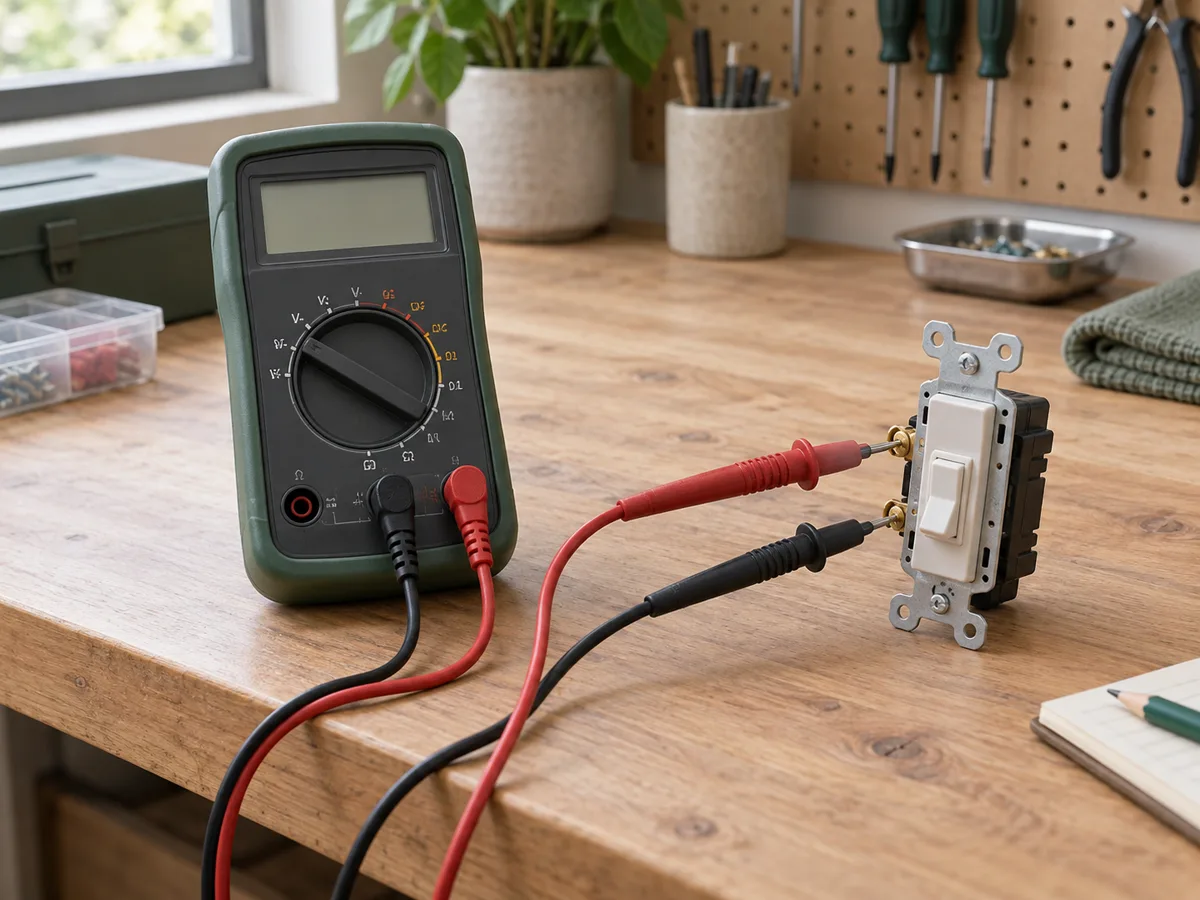
Measure voltage, resistance and continuity without confusing the setting, socket or safe working limit.
How to use it
Distinguish a CO alarm from a CO₂ monitor, keep the correct manual and replacement record, and never use a quiet alarm or a self-test as proof of safe air.
How to use itUse and limitations. Sources include US public agencies. Principles are general; regulations and design values must be checked where you live.Worked examples use stated hypothetical inputs.